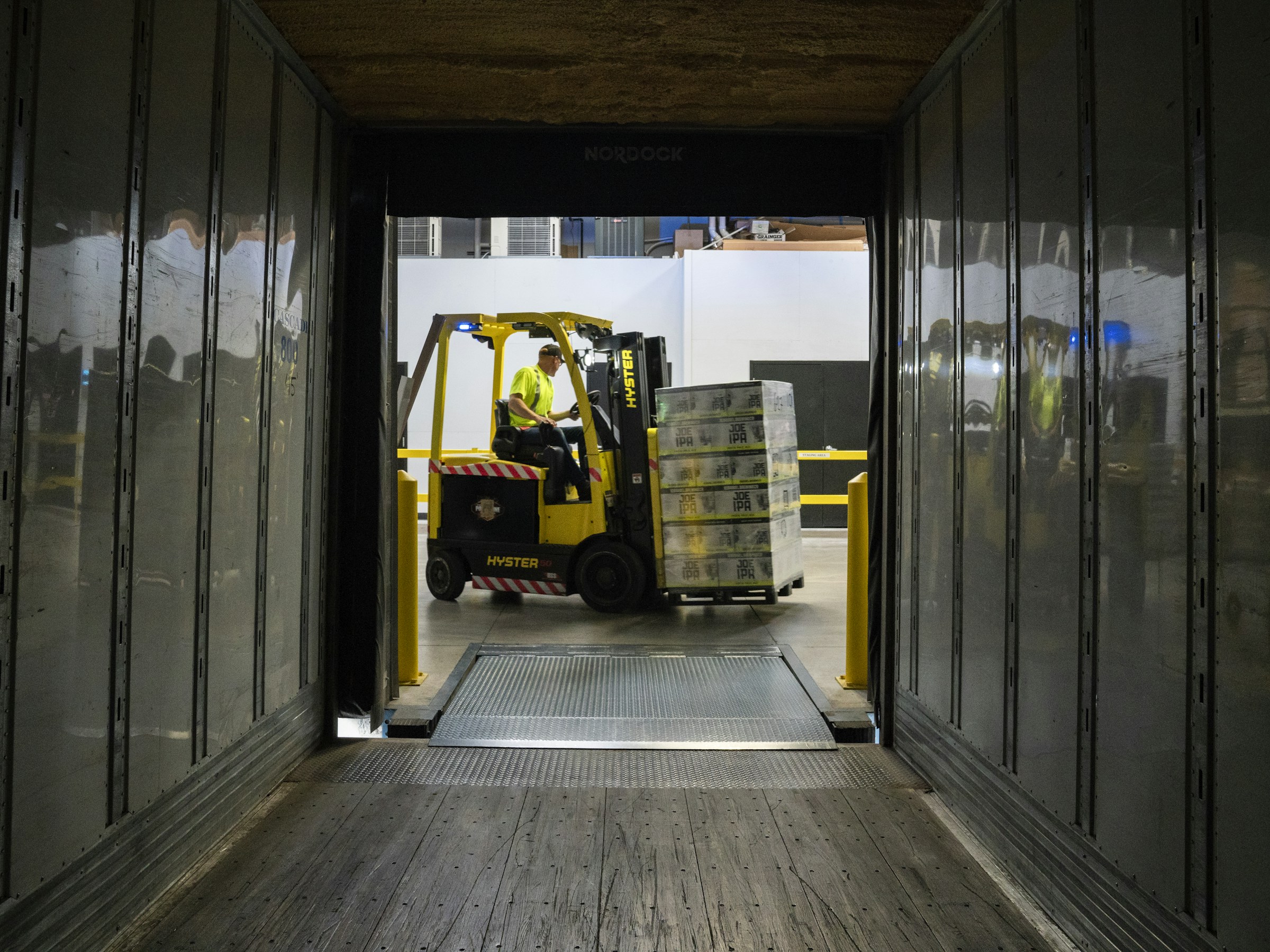
Stock & warehouse
Stock you can actually believe
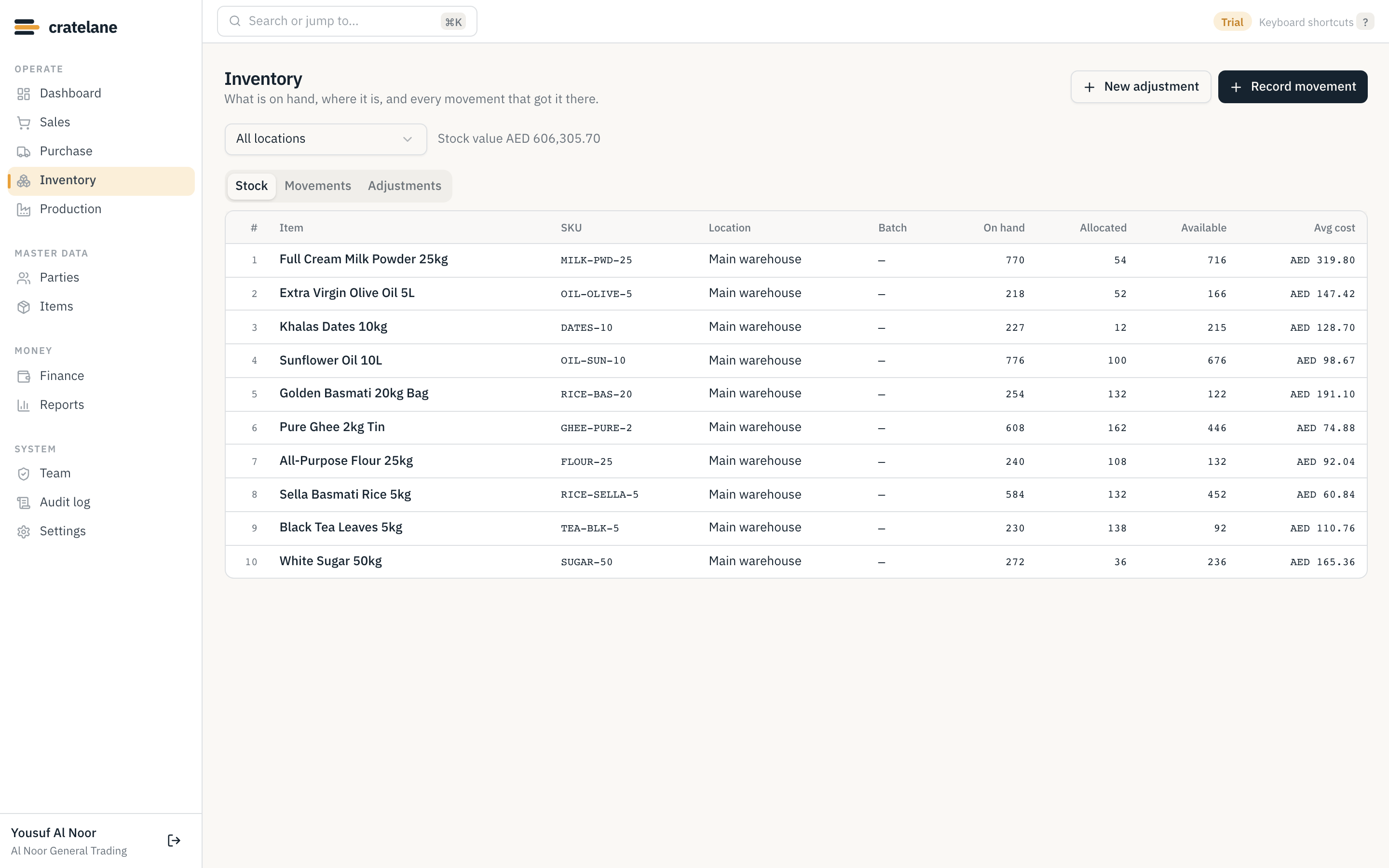
In crateline a quantity is never typed over. Every change is a movement — received, sold, transferred, adjusted — appended to a ledger with a reason and a name against it. The balance you see is the sum of those movements, which is why it reconciles with the shelf.
Batches and expiry, properly
If you move food, pharma or chemicals, a batch is not a text field. Crateline tracks batches with manufacture and expiry dates, and picking defaults to first-expiry-first-out so the stock nearest its date leaves first — expired stock excluded, because the naive version of that rule would put the one carton that must never ship at the front of the queue.
- Expiry visible on the dashboard before it becomes a write-off
- FEFO picking with a FIFO fallback for goods with no shelf life
- Dispatch refuses an expired batch, even if the order was raised weeks earlier
- A minimum remaining shelf life you can set, for customers who demand it
- Serial numbers where you need to trace a single unit
Reserved is not the same as available
The moment an order is confirmed, its stock is held. Your team sees on-hand, allocated and available as three separate numbers, so nobody promises a customer goods that are already spoken for.
- Confirming an order reserves stock in one transaction
- A shortfall rolls the whole order back rather than half-reserving
- Amending an order releases what it was holding
Counts that cannot quietly rewrite history
A picker counting a shelf files what they counted. The system works out the difference and raises a reason-coded adjustment for a supervisor to approve. Nothing is written off from the warehouse floor.
- Reasons: damage, expiry, theft, sample, count correction
- Approval before stock moves
- Every adjustment carries who, when and why
More than one place to keep things
Godowns, depots, a counter, a van. Transfers move stock out of one and into another as a single transaction, so nothing is ever briefly in both places or neither.
- Unlimited locations on Growth and above
- Per-location balances and valuation
- Weighted-average cost maintained as goods arrive
Not built yet
Warehouse bin locations and putaway rules. Today a location is a godown or a van, not a rack and shelf — if you need to direct a picker to bay C-14, we are not there yet.
See it against your own stock list
Bring a real item file and a real customer list. Half an hour, no slides — we load your data and you decide whether the numbers look like your business.
14 days · no card · export your data any time